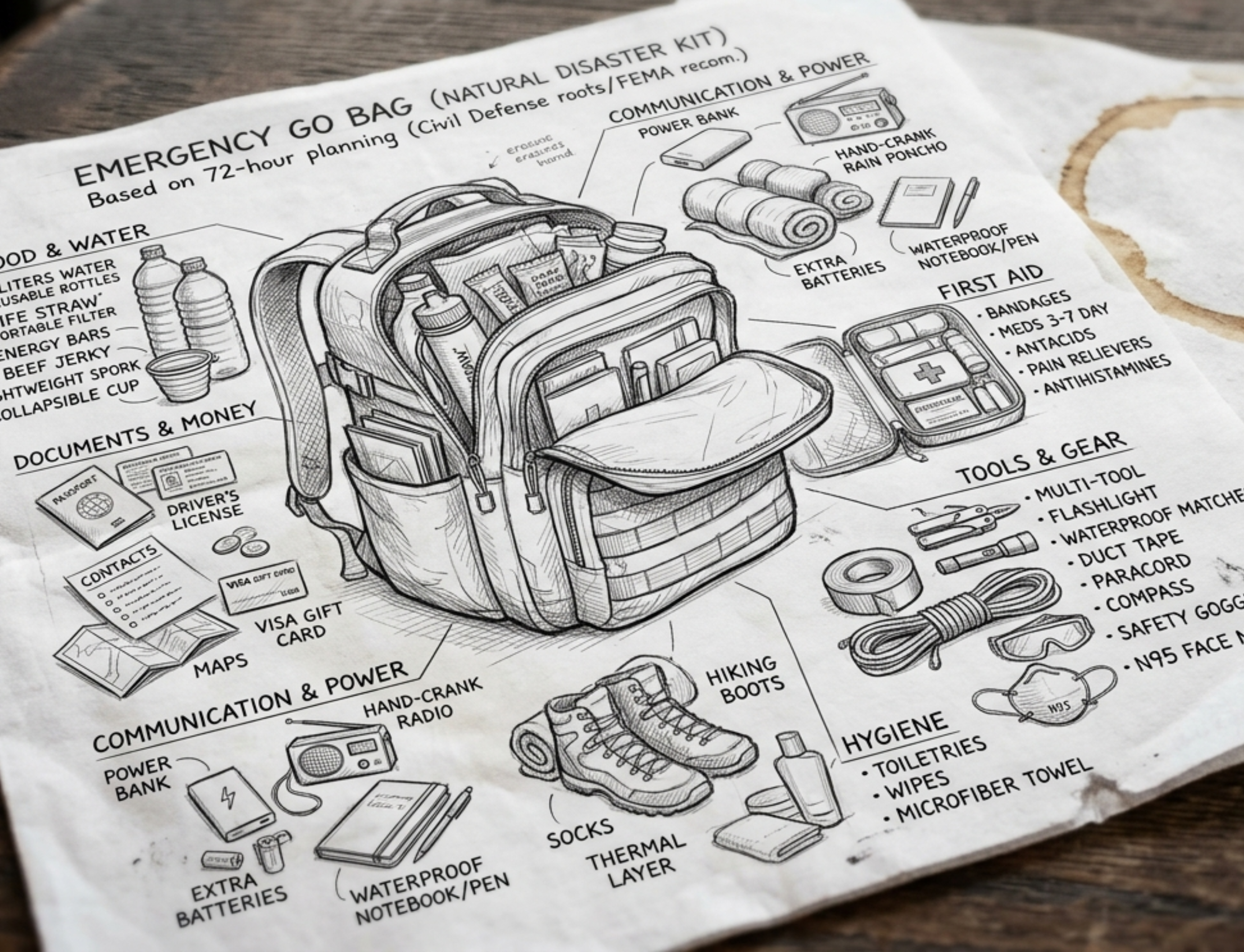
The concept of the go bag traces back to early civil defense planning. during periods like World War II and the Cold War. Governments began encouraging civilians to keep emergency supplies ready in case of nuclear threats, or disasters.FEMA and the Red Cross encourage "72-hour kits”.
For the purpose of this tutorial we're going to assume that you need to escape a natural disaster of some sort. If that's not the case adjust accordingly. This list jumps back-and-forth so choose what works for you
Choosing a bag:
This is more important than it sounds. You need something sturdy and compact that isn't a burden to carry long distances for long periods of time. Aim for under 20% of your body weight when packed. Most people recommend backpacks or messenger bags. Personally, Messenger bags end up choking me so I prefer a backpack
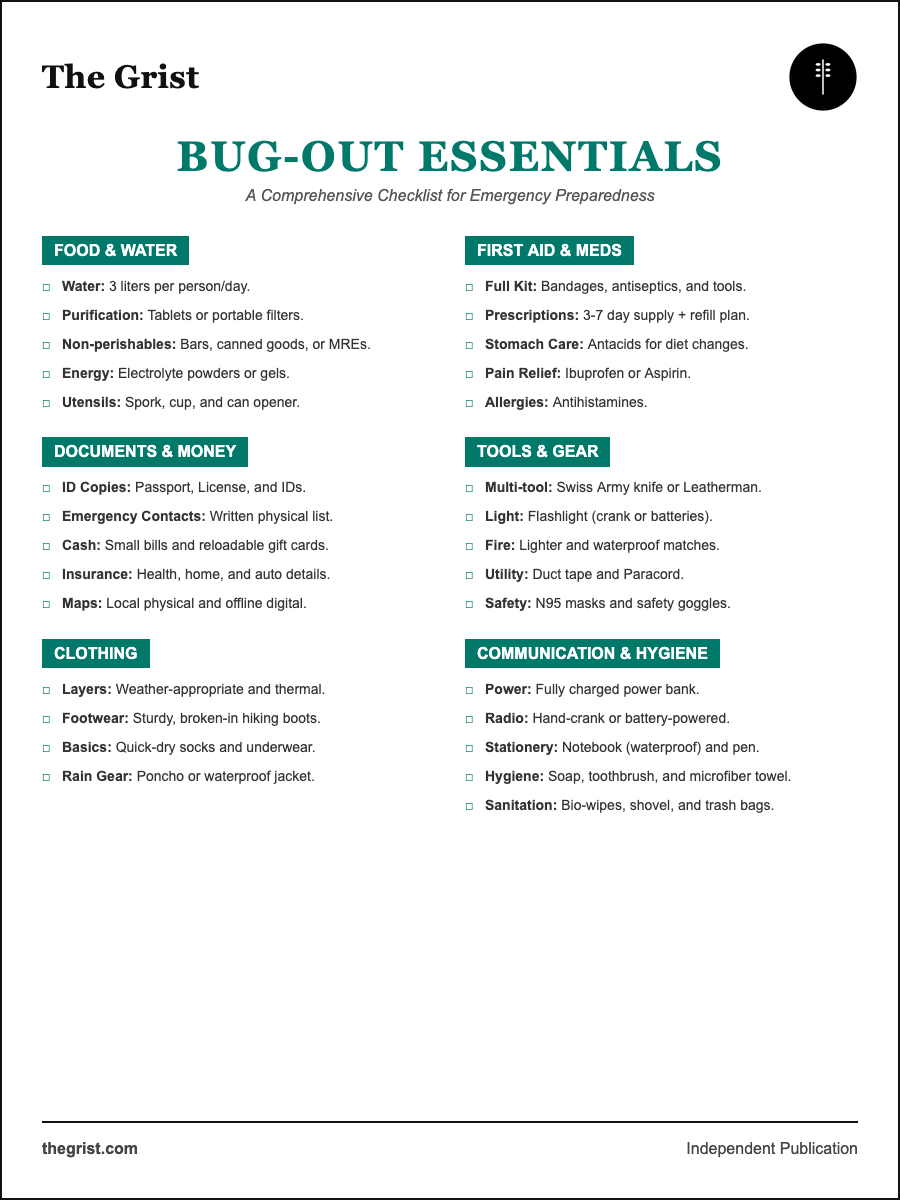
Food & Water
Water: 3 liters per person per day is a good rule of thumb
Water purification: Tablets or a portable filter (e.g., LifeStraw).
Non-perishable food: energy bars, canned food, and beef jerky. some people go the full MRE route. it comes down to whether you're packing the bag for society collapsing or being away for a bit because of a natural disaster.
Energy boosters: Electrolyte powders or energy gels.
Utensils: Lightweight spork, collapsible cup. can opener if your multitool doesn't have one.
Documents & Money
ID copies: Passport, driver's license, and other IDs.
Emergency contacts: WRITTEN list of important numbers.
Cash: Carry small bills and coins for places that may not accept cards. In the 21st century, a reusable Visa or MasterCard gift card is also recommended. Choose one that does not expire and ensure it can be reloaded with funds as needed
Insurance info: Health, home, and auto insurance details.
Maps: Local area maps in case digital navigation fails. Both Google and Apple Maps offer off-line downloads so you don't need a signal to use maps on your phone.
Communication & Power
Portable phone charger: Fully charged power bank.
Emergency radio: Hand-crank or battery-powered.
Extra batteries: For devices.
Notebook & pen: Waterproof paper is ideal. Be prepared to go analog
Clothing
Weather-appropriate layers: Include thermal layers if cold.
Sturdy shoes: Waterproof or hiking boots. if you have special shoes just for bugging out remember to break them in first.
Extra socks & underwear: Prioritize quick-drying materials.
Rain gear: Poncho or waterproof jacket.
Hat & gloves: For sun or cold protection.
First Aid
complete first aid kit: Bandages, antiseptics, tweezers, etc.
Prescription meds: 3-7 day supply. have a plan in place with your doctor for getting your hands on refills out in the wild.
antacids: you may not always have a choice of the food you eat and a disruption in routine can cause stomach upset for some individuals.
Pain relievers: Ibuprofen, aspirin. Being on the go will result in you being more active than normal.
Antihistamines: For allergies or insect bites.
Tools & Gear
Multi-tool: Swiss Army knife or Leatherman.
Flashlight: With extra batteries or hand-crank.
Lighter & waterproof matches: Fire-starting essentials.
Duct tape: Versatile for repairs.
Rope/cord: Paracord for various uses.
Compass: Simple and reliable. again, your mileage may vary
Safety goggles: For dusty or hazardous environments.
Face masks: N95 masks for smoke or airborne particles.
Hygiene
Toiletries: Travel toothbrush, toothpaste, soap, deodorant.
Sanitation supplies: Small shovel, biodegradable wipes, trash bags.
Towel: Quick-dry microfiber.
Menstrual products: As needed.
A go bag isn't a set-it-and-forget-it project. You should Rotate your food and water every six months, try to get into the habit of swapping it out whenever daylight saving time starts or ends Just like your smoke detector battery. Do your best to Treat it like a living kit, something you maintain. A well packed go bag is less about worst-case thinking and more about reducing friction. So when things go sideways you're walking out the door instead of running around looking for your phone charger.